5 Shocking Reasons 77 Million Americans Ditched Cable for IPTV
The landscape of home entertainment in the United States has reached a historic turning point. For decades, traditional coaxial wire lines dictated how households consumed broadcast media across the nation. However, recent consumer data reveals an unprecedented migration toward modern internet-based streaming protocols.
When analyzing iptv vs cable usa markets, the core difference lies in structural content delivery. Cable relies on a fixed local infrastructure grid managed by regional monopolies. Conversely, IPTV delivers data packets seamlessly across broadband networks directly to your modern viewing hardware.
This technological evolution shifts complete control away from corporate schedulers and directly to the viewer. Consumers are discovering that internet delivery offers unmatched customization options for everyday entertainment. Making the switch has become the definitive standard for modern American digital living.
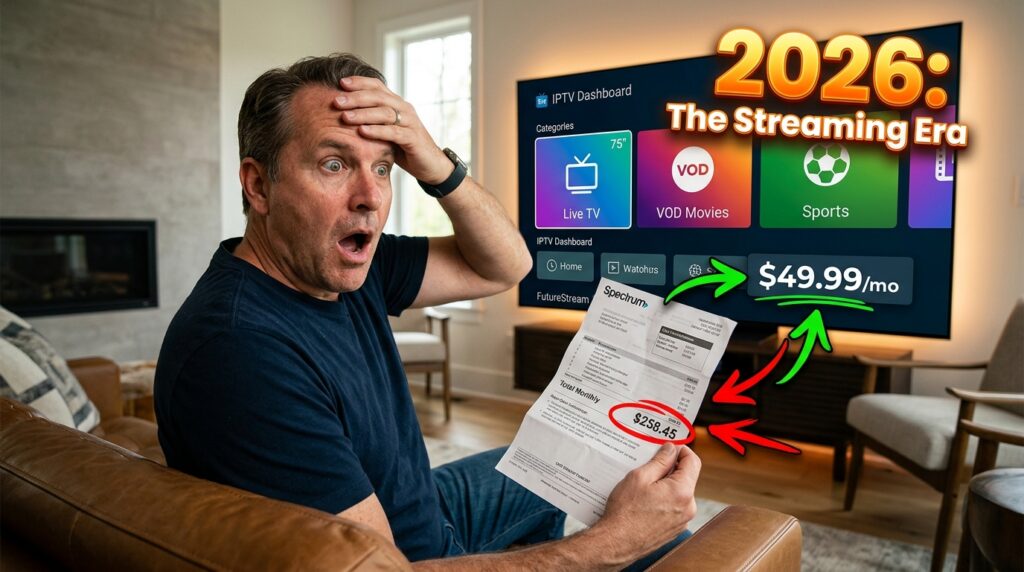
The year 2026 marks a massive consumer migration away from rigid US cable grids into highly personalized, internet-delivered television networks.
Table of Contents
Understanding the Technology: IPTV vs Cable USA
To understand why this shift is happening, it helps to look at how each platform functions behind the screen. Traditional delivery methods are struggling to keep pace with rapid digital software developments. The foundational mechanics of how you receive your video signal determines your overall viewing freedom.
How Traditional US Cable Infrastructure Works
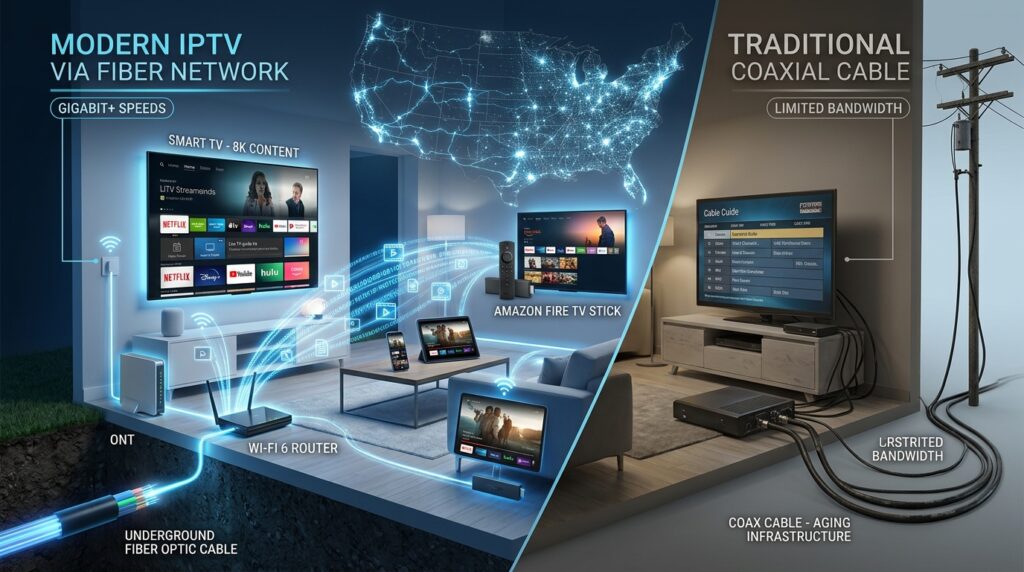
Conventional cable infrastructure depends on a constant digital signal sent from a provider’s local head-end facility. This signal travels down a massive network of physical fiber-coaxial lines straight into your living room wall. Because it relies on a physical hardware infrastructure, it requires a dedicated connection tied to a single geographical location.
How Modern IPTV Protocol Works
Internet Protocol Television handles media distribution through an entirely different structural framework. Instead of broadcasting all television channels simultaneously through a copper wire, it streams specific data packets over your broadband. When you select a live channel, only that specific stream is delivered directly to your device.
Cable TV Hub
Coaxial/Fiber Grid
Fixed Wall
IPTV Servers
Cloud Broadband
Any Screen
Three Main Pillars of IPTV Delivery
Live IPTV: Real-time broadcasting of television channels over the internet, perfectly mimicking the traditional TV guide experience.
Video on Demand (VOD): Massive cloud libraries allowing users to select and watch movies or series at any hour.
Time-Shifted IPTV: Interactive features like catch-up TV that let you replay broadcasts that aired days ago without recording hardware.
The flexibility of internet delivery has given rise to premium service ecosystems like [suspicious link removed]. These services utilize advanced server networks to ensure data packets arrive without interruption or packet loss. Consumers can enjoy a highly stable link that matches or exceeds old infrastructure capabilities.
Financial Breakdown: The Monthly Cost Comparison
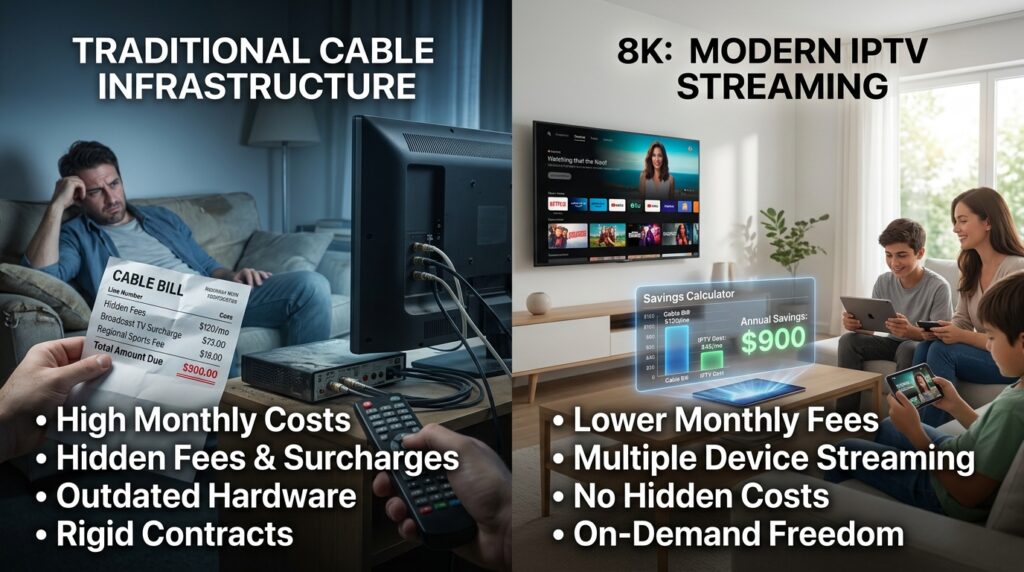
The primary driver behind the changing landscape of television delivery is the financial commitment required by both models. Traditional entertainment models have consistently raised prices over the past decade. Most American households are actively looking for practical ways to optimize their monthly utility budgets.
Fee Category
Traditional US Cable Packages
Modern IPTV Subscriptions
Average Monthly Base Cost
$100 – $147
$10 – $30
Equipment Rental Fees
$10 – $15 per box
$0 (Uses existing hardware)
Broadcast & Sports Fees
Up to $30/month hidden fees
Included in base price
Contract Requirements
12 to 24-month commitments
Month-to-month / Cancel anytime
Estimated Annual Cost
$1,200 – $1,764
$120 – $360
Hidden Fees Plaguing Traditional Cable Bills
The advertised price of a standard cable bundle is rarely what you actually pay on your final statement. US consumers are often caught off guard by regional sports fees, local broadcast retransmission fees, and administrative surcharges. These hidden costs can inflate a standard bill by thirty percent or more each consecutive month.
The True Cost Efficiency of IPTV Systems
IPTV systems run on a much lighter operational model that eliminates massive physical maintenance expenses. Because providers bypass the expenses of maintaining physical regional wiring networks, those savings are passed directly to subscribers. Reviewing the competitive xtreme hd iptv pricing options reveals how affordable internet-based media delivery has truly become.
American households are finding that selecting affordable iptv subscription plans provides an immediate boost to their disposable income. These savings do not require sacrificing your favorite entertainment options or premium channel packages. The financial math clearly favors modern streaming deployment over legacy wired services.
Feature and Flexibility Faceoff: IPTV vs Cable USA
Beyond the financial aspect, the user experience differs significantly when comparing iptv vs cable usa capabilities. Modern viewers demand instant access to their media regardless of their physical location or device availability. Legacy systems struggle to provide this level of fluid accessibility due to physical hardware constraints.
Channel Customization vs Rigid Tiered Bundles
Cable providers bundle networks into rigid tiers, forcing you to pay for dozens of networks you never intend to watch. IPTV platforms focus on personalized viewing, allowing users to choose specific packages or look at an expansive xtreme hd iptv channel list instantly. This ensures you only interact with content that matches your specific household lifestyle.
Device Compatibility: Fixed Outlets vs Screen Freedom
A legacy cable box locks your viewing experience to a single room and a specific piece of living room furniture. IPTV removes these spatial limits entirely by turning any internet-connected screen into a fully functioning television receiver. You can transition your active viewing session from the living room directly to a handheld tablet seamlessly.
CABLE TV
Restricted to Physical Wall Outlets & Boxes
IPTV APPS
Smart TVs, Firesticks, Smartphones, Tablets
Hardware Flexibility and Smart Home Integration
Smart TVs: Stream directly through native software applications built into your display panel like the custom xtreme hd iptv samsung tv player.
Streaming Sticks: Compatible with compact hardware options including Amazon Firestick, Roku, and Google TV devices.
Mobile Form Factors: Watch your live content on smartphones, tablets, and laptops while traveling outside your home network.
Smart Home Systems: Full integration with voice assistants and automated home entertainment ecosystems for simple voice control.
IPTV eliminates restrictive, multi-year contracts and physical wall tethers, allowing Americans to view content across multiple screens simultaneously for a fraction of the cost.
Is IPTV Better Than Cable for Live Sports and News?
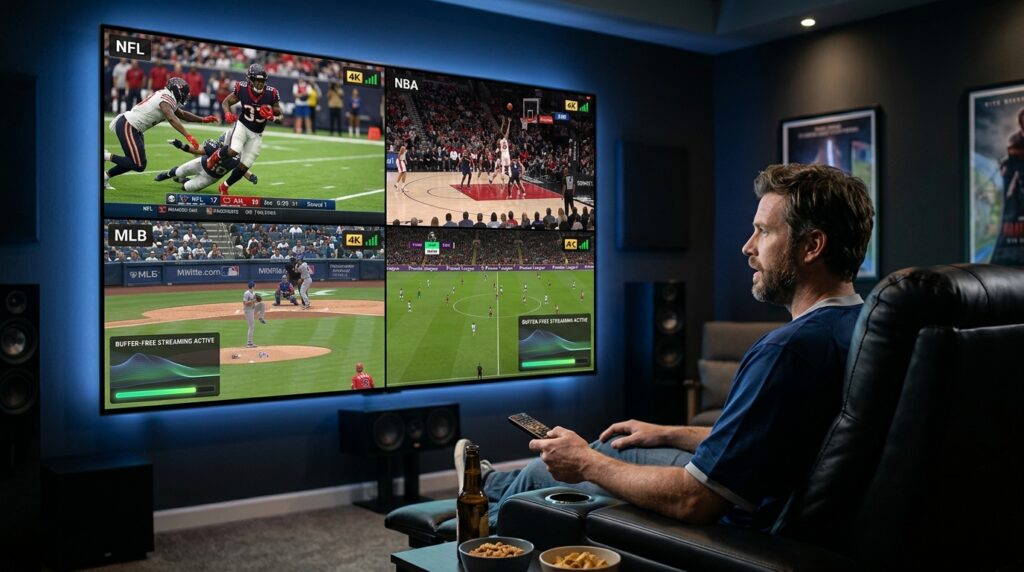
Yes, for most viewers, IPTV offers a superior sports and news experience due to broader global access. Premium IPTV services deliver thousands of regional, national, and international feeds, including out-of-market sports packages, at a lower cost. However, cable retains a slight edge in broadcast latency, trailing live events by fewer seconds.
Accessing Regional and International Broadcast Networks
For expatriates and passionate sports fans, standard cable bundles often fall short of expectations. They rarely include international networks or specialized niche sports packages without charging exorbitant premium tier fees. Utilizing a dedicated service designed as an iptv for sports solution opens access to global athletic events instantly.
The Latency Dilemma: Live Broadcast vs Digital Streams
One specific area where traditional cable holds a technical advantage is real-time signal latency. Because fiber-coaxial lines deliver data instantly, cable events appear closer to the actual live action. Digital streams must compress and decompress data packets over public networks, which can introduce a minor delay during broadcast events.
Managing Your Daily Viewing Schedules
Modern software interfaces provide detailed tools like the comprehensive xtreme hd iptv channel guide to help you keep track of live events. These electronic program guides ensure you never miss a breaking news segment or a live kickoff. Navigating through thousands of international options becomes as simple as clicking a button on your existing remote control.
Performance, Quality, and Reliability Metrics
When comparing the stability of iptv vs cable usa connections, performance depends heavily on your local infrastructure. Both delivery models have technical thresholds that dictate whether your image remains crisp or suffers from quality degradation. Understanding these variables ensures you can configure your home hardware configuration for maximum reliability.
Resolution Battles: HD, Full HD, and 4K Capabilities
Modern IPTV infrastructure utilizes advanced compression protocols to deliver stunning 4K HDR10 and Dolby Vision video content. If your provider supports high-bandwidth streams, the visual presentation can easily surpass compressed 1080i signals common to traditional cable grids. The image clarity provides a much more immersive home theater experience.
Bandwidth and Network Stability Requirements
To maintain a crisp, buffer-free streaming environment, your home internet connection must meet specific speed thresholds:
Standard Definition (SD): Minimum 3 Mbps per active household device.
High Definition (HD): Minimum 10 to 15 Mbps per active household device.
Ultra High Definition (4K): Minimum 25 to 50 Mbps of stable, uninterrupted network bandwidth.
4K UHD Stream
25-50 Mbps
HD 1080p Stream
10-15 Mbps
SD 480p Stream
3 Mbps
Addressing Common Buffering Issues
Some users occasionally run into playback interruptions while configured on unoptimized networks. Reading through the collective feedback in the xtreme hd iptv buffering reddit threads offers excellent troubleshooting perspectives. Most issues stem from local Wi-Fi congestion rather than server-side distribution problems.
If you encounter performance drops, investigating xtreme hd iptv buffering solutions can resolve playback stalls instantly. Switching from a wireless connection to a hardwired Ethernet cable often solves data delivery issues. This optimization guarantees a smooth streaming experience that rivals old cable connection steadiness.
Navigating the Legal and Regulatory Landscape in the US
Understanding the legal landscape is essential when exploring modern internet television solutions within the United States. Federal regulatory bodies monitor how digital media content is distributed across public networks. Consumers must remain informed about what constitutes legitimate streaming architecture to protect their personal households.
Distinguishing Between Authorized and Gray-Market Services
The US market features two distinct categories of internet television delivery platforms. Authorized platforms hold direct, transparent licensing agreements with major media production networks. Exploring questions like is xtreme hd iptv legal helps consumers understand how different service tiers operate within current regulatory frameworks.
Compliance, Copyright Laws, and Consumer Safety
Using unverified services carries inherent security and operational risks for everyday consumers. The Digital Millennium Copyright Act allows authorities to shut down non-compliant distribution systems without any advanced notice. Ensuring your chosen network maintains standard data protection compliance keeps your private billing information completely safe.
LEGAL PROVIDERS
Properly Licensed Rights
(YouTube TV, Hulu, Sling) Secure, Authorized, Compliant
UNLICENSED SERVICES
Gray Market / Infringing
(Unverified Third-Party) Security Risks & Outages
Evaluating Brand Legitimacy
Smart shoppers always look for comprehensive consumer reviews before purchasing digital services online. Reading an objective xtreme hd iptv review provides clear insight into a platform’s long-term field performance. Checking customer testimony helps you avoid unreliable fly-by-night operations that lack solid support infrastructure.
Step-by-Step Guide: How to Safely Switch to IPTV
Transitioning away from legacy cable systems is a straightforward process when approached methodically. You do not need to wait for a professional service technician to install proprietary wiring in your home. By utilizing standard streaming hardware, you can complete the entire setup sequence in under fifteen minutes.
Step 1: Testing Your Broadband Infrastructure
Before cutting the cord, run a standard speed test during peak evening hours to check your active bandwidth capacity. Ensure your network delivers a stable connection with low latency to prevent buffering during high-demand live sports events. If your speeds are insufficient, consider upgrading your internet plan using your cable savings.
Step 2: Selecting and Preparing Your Hardware
Pick a hardware platform that aligns with your household entertainment setup. The Amazon Firestick remains an incredibly popular choice due to its excellent processing power and affordable pricing. You can learn the complete configuration process by following a guide on installing xtreme hd iptv on firestick to prepare your streaming stick correctly.
Step 1: Speed Check
Verify home broadband meets
25+ Mbps speed standard.
Step 2: Choose Box
Select a compatible device like
a Firestick or Smart TV app.
Step 3: Pick Plan
Subscribe to a legal, reliable
service provider.
Step 4: Installation
Load software app, enter login
credentials, and begin.
Step 3: Deploying the Application Software
Once your hardware is ready, you need to acquire the proper software execution application. This process often involves utilizing a dedicated utility tool to unpack the necessary files safely onto your device. Reviewing the steps to download xtreme hd iptv on firestick will guide you through downloading and installing the layout files.
Step 4: Final Configuration and Playlist Management
Open the newly installed application and input the subscription details provided by your chosen entertainment platform. This links your device to the cloud media servers and populates your interactive on-screen guide instantly. From here, you can organize your favorite networks and enjoy your streamlined, cost-effective television package.
Frequently Asked Questions (FAQs)
What do I need to switch from cable to IPTV?
To transition away from cable, you need a high-speed internet connection of at least 25 Mbps, a compatible streaming device, and an active subscription. You can check initial service compatibility by requesting an iptv free trial to test performance before making any long-term financial commitments.
Can I access my local US news channels on IPTV?
Yes, most authorized providers include local network affiliates based directly on your current geographic location settings. Many premium software setups utilize the highly popular iptv smarters pro media application to organize and display regional live broadcasting channels cleanly.
How much money does the average US household save by cutting the cord?
The average US household saves between $900 and $1,400 annually after removing legacy physical hardware lines. You can compare regular rates by reviewing an established best iptv service breakdown to find plans that fit your target budget.
Is it difficult to configure streaming apps on an Amazon Firestick?
Configuring application files on an Amazon device is a simple task that requires no programming knowledge. Following a straightforward guide to install xtreme hd iptv on firestick will walk you through the settings adjustments required to get channels running.
What should I do if my streaming service experiences an unexpected outage?
If your stream stops loading, verify your local internet modem is still communicating with public networks correctly. If your internet is working fine, checking updates regarding is xtreme hd iptv down can confirm if the platform is experiencing temporary server-side system maintenance.
The Future of Television Delivery in the USA
When evaluating the current iptv vs cable usa market landscape, the future trajectory points clearly toward an internet-driven media ecosystem. Traditional cable infrastructure offers excellent localized reliability during widespread web outages, but its structural limits are becoming painfully obvious. The combination of high operational costs, hidden fees, and rigid contracts makes legacy cable less appealing to modern households.
Ultimately, internet-based television delivery provides unmatched channel flexibility, international accessibility, and significant long-term cost savings. By aligning your home setup with high-speed broadband and an official streaming application, you create a modern theater ecosystem tailored to your family. The digital era of home media delivery is no longer a luxury, but an accessible reality for millions of American homes.